A kitchen remodel sits somewhere between a home improvement dream and a financial reality check. Whether you’re planning to refresh your space or completely overhaul it, understanding what a kitchen remodel costs is the first step to keeping the project on track and your budget intact. Kitchen remodeling costs vary wildly depending on scope, materials, and labor in your area. In 2026, homeowners can expect anywhere from $15,000 for a modest refresh to well over $100,000 for a luxury renovation. This guide breaks down real pricing across different budget levels so you can plan smarter and avoid costly surprises down the road.
Table of Contents
ToggleKey Takeaways
- Kitchen remodel costs range from $15,000 for budget-friendly updates to over $100,000 for luxury renovations, with mid-range projects typically falling between $20,000 and $50,000.
- Materials and labor each consume 40-50% of your kitchen remodel cost, so understanding regional wage rates and material pricing is essential to avoiding budget overruns.
- Cabinet replacement or refacing alone can cost between $4,000 and $20,000, making it one of the largest single expenses in any kitchen remodel project.
- Structural changes like removing walls, relocating plumbing, or adding islands with reinforced joists can quickly escalate costs by $2,000 to $8,000 or more, so budget carefully for any layout modifications.
- Permits and inspections are mandatory for most kitchen remodels and typically cost $500-$2,000, with skipped permits potentially voiding insurance coverage and complicating future home sales.
- Prioritizing one or two statement upgrades—such as a quality range hood, premium countertops, or high-end appliances—allows you to maximize impact within your kitchen remodel budget rather than spreading funds too thin across all categories.
Average Kitchen Remodel Costs by Budget Level
Budget-Friendly Remodels Under $15,000
A budget-friendly kitchen remodel targets cosmetic updates without structural changes. You’re looking at new cabinet hardware, paint, updated lighting fixtures, a fresh backsplash, and possibly refinishing or repainting existing cabinetry. Labor costs run lower here because you’re not moving plumbing or electrical lines, removing load-bearing walls, or replacing major appliances.
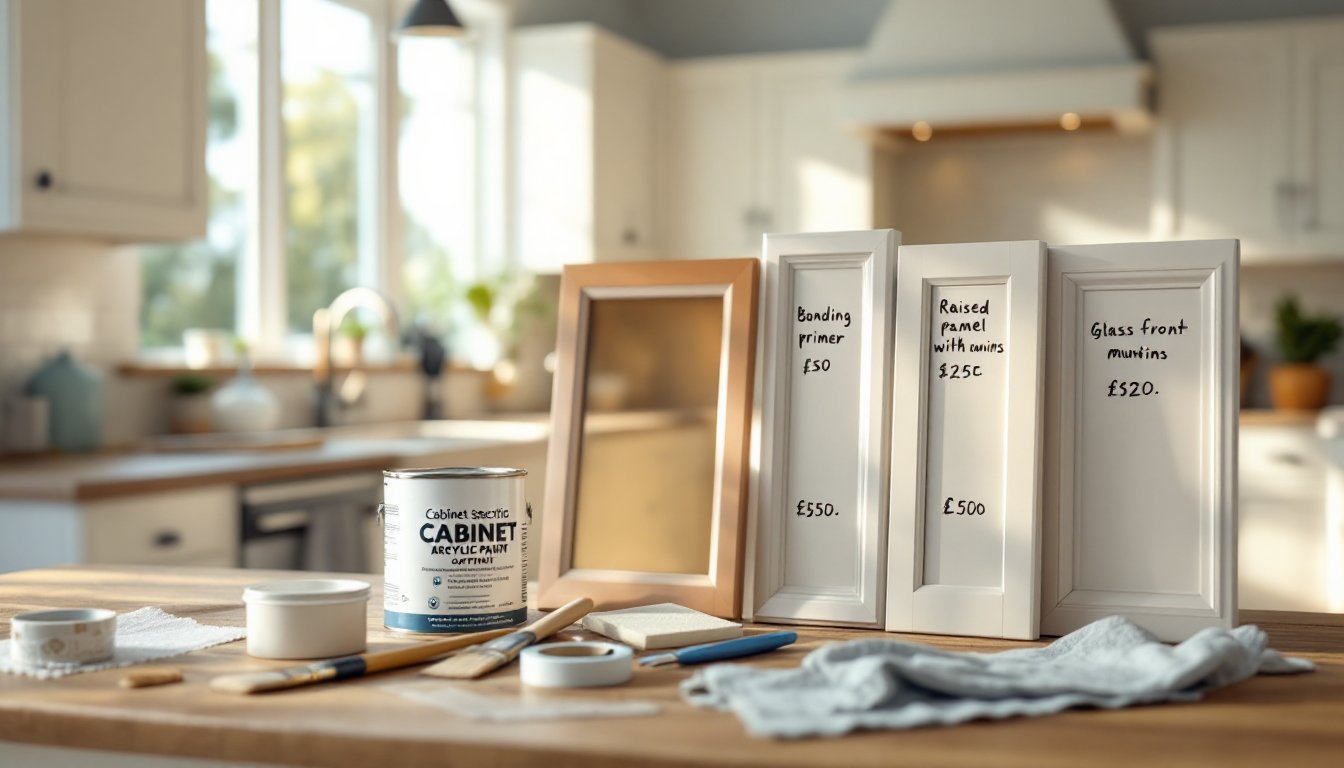
At this level, cabinet refacing, painting or restaining existing frames while keeping the box structure, replaces cabinet replacement. Countertops might be laminate or basic solid surface rather than granite or quartz. The sink stays put unless it’s beyond repair. Appliances typically remain, though you might swap the range hood for something more efficient. Backsplash tile work and fresh paint on walls round out the scope. Budget roughly $8,000 to $15,000 depending on square footage and whether you tackle some tasks yourself.
Mid-Range Remodels Between $15,000 and $50,000
Mid-range work introduces real material upgrades and moderate structural flexibility. You’re now replacing cabinets with semi-custom or stock units, upgrading to solid surface or mid-grade quartz countertops, and moving toward higher-end appliances. Plumbing might shift slightly, a sink relocation or new island with seating, but nothing structural. Labor becomes a larger cost component because work gets more involved.
Expect new flooring (engineered hardwood, porcelain tile, or upgraded vinyl), custom backsplash patterns, electrical outlets added for modern appliance needs, and possibly a peninsula or small island. Ventilation upgrades (a proper range hood ducted to the exterior, not recirculated) and recessed lighting improve function and aesthetics. Many contractors in this range recommend a designer consultation to maximize layout and flow. Budget $20,000 to $50,000 depending on kitchen size, finish selections, and regional labor costs.
High-End Remodels Over $50,000
High-end kitchens feature custom cabinetry, premium materials throughout, and often structural modifications. You’re working with cabinet makers, not stock options, allowing custom sizing and finish work. Countertops shift to granite, marble, or slab quartz. Appliances are usually high-performance brands with commercial-grade options for serious cooks. This budget category includes moving walls to open the layout, reinforcing joists for islands, upgrading the entire electrical panel to support modern loads, and relocating significant plumbing work.
Design consultation is standard, an architect or experienced designer helps coordinate layout, materials, and workflow. Premium finishes include custom hood designs, integrated refrigeration, wine coolers, and custom lighting systems. Flooring might be natural stone, wide-plank hardwood, or specialty tile. Backsplash becomes a design statement with high-end tilework or slabs. Budget $50,000 to $150,000+ depending on scale, material choices, and structural complexity.
Key Cost Factors That Impact Your Project
Materials, Labor, and Structural Changes
Materials typically consume 40-50% of the total budget in a mid-range kitchen remodel. Cabinet costs alone can swing from $3,000 for stock units to $20,000+ for custom work. Countertops range from $2,000 to $10,000+ depending on material and square footage. Appliances account for $3,000 to $15,000 depending on whether you replace one or all of them and which brands you choose.
Labor runs 35-50% of total budget and depends heavily on regional wage rates and project complexity. A simple cabinet refacing might need two weeks and one installer: a full remodel with structural work might stretch eight to twelve weeks with multiple trades (carpentry, plumbing, electrical, HVAC). Some regions see labor rates 30-50% higher than others, so always get local quotes rather than assuming national averages apply.
Structural changes, removing walls, adding islands that require reinforced joists, rerouting plumbing or electrical lines, escalate costs quickly. Load-bearing wall removal requires an engineer-designed beam, permits, and structural work ($2,000-$8,000 alone). Plumbing relocation costs $1,500-$3,000 per fixture moved. Electrical upgrades for modern kitchen loads (multiple circuits, GFCI outlets, sufficient amperage for induction cooktops) add $2,000-$5,000.
Permits and inspections are mandatory for structural changes and most mechanical work. Budget $500-$2,000 depending on your jurisdiction and project scope. Skipping permits isn’t an option, unpermitted work voids insurance coverage and complicates future home sales. According to detailed 2026 data, kitchen remodel costs range from $14,586 to $41,540 depending on scope and materials, though your regional market may shift these figures.
Material acclimation matters too. Wood cabinetry, hardwood flooring, and tile need to sit in your kitchen for at least 48 hours before installation so they adjust to humidity and temperature. Rush installations often fail, wood cups, grout cracks, and finishes don’t adhere properly. Prep work, including removing existing cabinetry, dealing with asbestos-laden floor tile (which requires professional abatement in many jurisdictions), and protecting adjacent spaces from dust, also adds time and cost.
Common Kitchen Upgrades and Their Price Tags
Understanding individual upgrade costs helps you prioritize what matters most. Cabinet replacement or refacing tops the list: refacing existing cabinets costs $4,000-$10,000 for an average kitchen, while new semi-custom cabinets run $8,000-$20,000. Custom cabinets push beyond $20,000 but offer precise sizing and finishes.
Countertops vary widely by material. Laminate runs $800-$2,000 for an average kitchen. Solid surface materials like Corian cost $2,000-$4,000. Granite, marble, or mid-range quartz falls in the $3,000-$8,000 range. Premium slabs or exotic stone climb to $8,000+. Installation adds 20-30% to material costs.
Appliances depend on brand and whether you replace one, some, or all. A quality refrigerator ranges $1,500-$4,000: a mid-range range/oven $800-$2,000: a dishwasher $600-$2,000. High-performance or specialty appliances (gas ranges, ventilation hoods, wine coolers) can double or triple these figures. Many homeowners prioritize one statement appliance rather than upgrading everything at once.
Flooring options span a broad price range. Vinyl plank runs $2-$5 per square foot installed. Tile averages $3-$8 per square foot. Engineered hardwood costs $5-$12 per square foot. Natural stone and wide-plank hardwood exceed $12 per square foot. For a 150 sq. ft. kitchen, expect $1,500-$3,000 for vinyl, $3,000-$6,000 for tile, $4,500-$10,000 for engineered hardwood.
Backsplash work varies by complexity. Basic subway tile with simple grout lines costs $500-$1,500. Custom tile patterns, mosaic work, or stone backsplash reaches $2,000-$4,000 or more. Some homeowners skip the backsplash initially to save money and add it later.
Lighting and ventilation upgrades improve both form and function. A quality range hood (ducted to exterior, not recirculated) runs $400-$1,500. Recessed lighting, pendant fixtures, and under-cabinet LED strips add $800-$2,500 depending on the quantity and finish. Proper ventilation prevents moisture buildup and odor, a worthwhile investment even at modest budget levels.
Island or peninsula addition introduces a major cost increase. A basic island with no electrical or plumbing runs $1,500-$4,000 depending on size and cabinetry. If you’re moving plumbing (sink island) or adding electrical outlets, costs jump to $4,000-$8,000+. Islands require reinforced joists if your floor joists don’t have adequate bearing capacity, engineer that into your planning.
Many homeowners work with resources like ImproveNet to compare contractor estimates and renovation planning, ensuring they’re getting fair pricing for their region and scope.